Rule 290-3-3-.05
Ala. Admin. Code r. 290-3-3-.05
Class B (Bachelor’s Degree Level) Programs for Teaching Fields
Effective May 15, 2025New Rule: December 19, 1978. Amended: Filed December 13, 1990; effective February 1, 1991. Repealed and Replaced: Filed January 9, 1997; effective February 13, 1997; operative July 1, 1997. Amended: Filed December 9, 1999; effective January 13, 2000. Amended: Filed March 14, 2002; effective April 18, 2002. Amended: Filed December 12, 2002; effective January 16, 2003. Repealed and New Rule: Filed September 11, 2003; effective October 16, 2003. Repealed and New Rule: Filed July 13, 2004; effective August 17, 2004. Repealed and New Rule: April 14, 2005; effective May 19, 2005. Repealed and New Rule: March 8, 2007; effective April 12, 2007. Repealed and New Rule: Filed August 6, 2007; effective September 10, 2007. Repealed and New Rule: Filed August 3, 2009; effective September 7, 2009; operative October 1, 2009. Amended: Filed June 15, 2012; effective July 20, 2012. Repealed and New Rule: Filed August 13, 2015; effective September 17, 2015. Amended: Filed September 13, 2018; effective October 28, 2018; operative June 1, 2019. Amended: Published August 31, 2020; effective October 15, 2020. Repealed and New Rule: Published August 31, 2021; effective October 15, 2021. Repealed and New Rule: Published March 31, 2025; effective May 15, 2025.Alabama State Board of Education
- 1. Overview of Educator Preparation Program Levels. Formal preparation of educators occurs at two levels, initial and advanced. Successful completion of an initial program may qualify the candidate for Class B certification or Class A certification upon completion of an Alternative Master’s program. Advanced programs are extensions of initial preparation and are divided into Class A traditional and Class AA programs. Advanced programs differ from bachelor’s programs not in general purpose but in the level of competence they seek to develop.
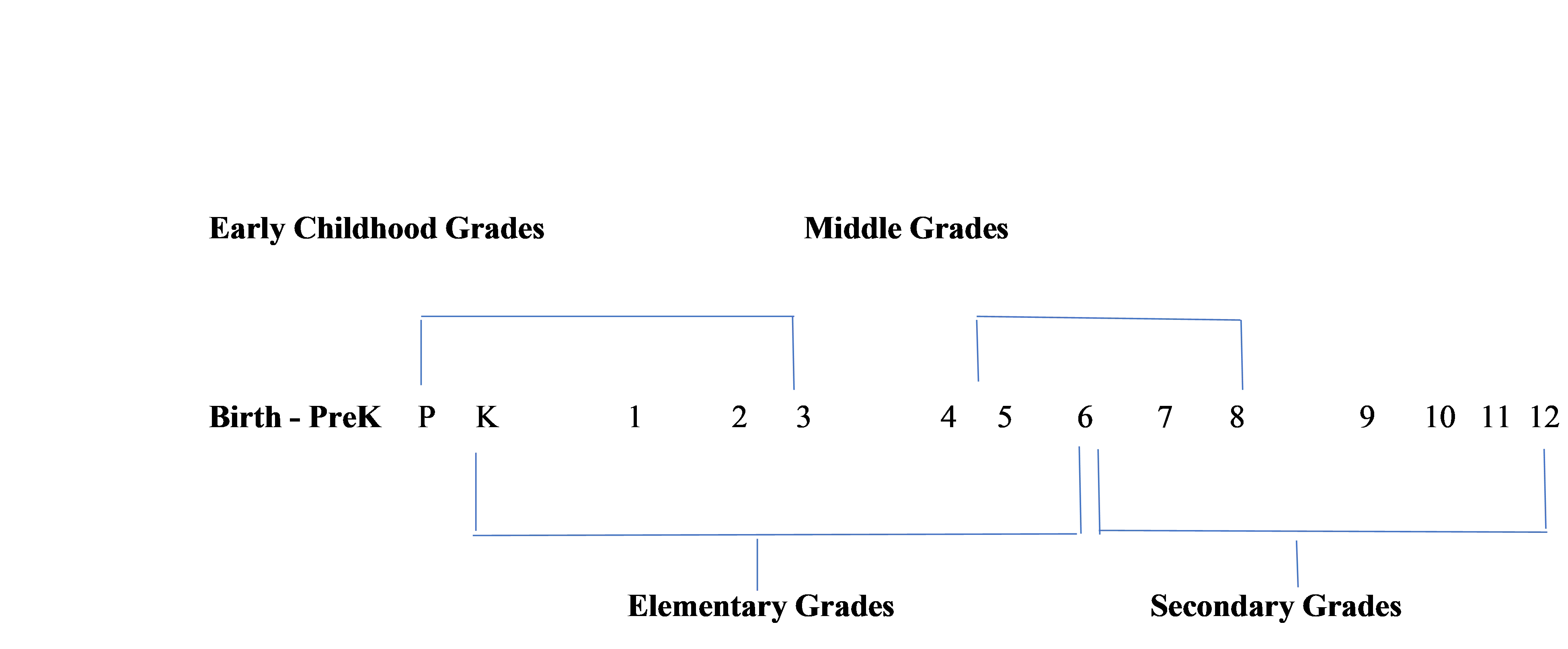
2. Relationship of Teacher Preparation Programs and Grade Placement.
3. General Program Requirements. The provision of Class B programs shall be limited to institutions that meet the standards for accreditation at the bachelor’s degree or higher level.
a. Unconditional Admission to Class B programs.
- i. Admission to the institution does not qualify an individual for admission to an educator preparation program. An applicant must be notified in writing whether his or her application for admission to a specific educator preparation program has been accepted.
ii. The college or university shall have clearly defined criteria for admitting candidates to an educator preparation program which include the following:
- a. A criminal history background check. See Rule 290-3-3-.03 (College and University Requirements).
- b. A formal written application for admission to a specific educator preparation program.
- c. A minimum GPA of 2.50 in all courses listed on the approved program checklist, 2.50 in professional studies courses, and 2.50 in the teaching field. No grade below a C can be earned in professional studies courses. Institutions may choose to have a higher GPA requirement. If a candidate has a 2.0-2.49 GPA in any area (program, professional studies, or teaching field), he/she may be admitted with the Dean’s approval if the alternate score on the Alabama-prescribed Praxis subject area test is obtained. (Note: CAEP cohort GPA requirements must still be met.)
- d. Remedial courses cannot be used to meet approved program requirements or calculated to meet GPA requirements.
- e. Satisfactory student dispositions.
- f. Field experiences and/or a practicum in the schools, designed to assist the candidate in making a wise career choice.
- iii. Each institution shall establish, publish, and enforce a policy that specifies when the candidate must meet criteria to be unconditionally admitted to the program.
- b. Special Education Course Requirement. A Survey of Special Education course is required if not previously completed, or, if course was completed more than 10 years ago. The course may not be older than 10 years unless the candidate has teaching experience within the last 5 years, or he/she used the course for prior level certification. The EPP will provide experience documentation (EXP) in situations where the Survey of Special Education coursework was taken more than 10 years ago.
- c. Methods Course Requirement. Each program shall have a discipline-specific methods course designed to teach candidates a set of principles used to enable student learning. Some programs will have more than one methods course.
- d. Classroom Management Requirement. Each program shall have either a dedicated classroom management course or the content embedded in other courses in the curriculum.
e. Requirements for Class B certification.
- i. An official transcript from an accredited institution documenting an earned bachelor’s degree. The institution must have been approved at the time of degree conferral.
ii. Satisfactory completion of a State-approved program with a minimum GPA of 2.50 in the program, 2.50 in the teaching field, and 2.50 in professional studies courses with no grade below a C in professional studies courses; OR satisfactory completion of a State-approved program with a 2.0-2.49 GPA in any area (program, professional studies, or teaching field) with one of the following exceptions met:
- a. The rounded GPA of 2.50 (i.e., 2.496 rounds to 2.50). EPPs may only round GPA calculations to the hundredth place.
b. The candidate takes six additional hours of coursework in the teaching field and makes either all As, all Bs, or a combination of As and Bs only, using of the following options:
- 1. These hours may be undergraduate courses.
- 2. These hours may be graduate courses. If graduate courses, the individual can later use these hours in partial fulfilment of requirements for a Class A Master’s program.
- 3. These hours may be a combination of undergraduate and graduate courses.
- c. The individual has met the alternate score on the appropriate Alabama Praxis assessment.
- d. An internship. See additional information in Rule 290-3-3-.03 (College and University Requirements).
- f. Testing for Class B Certification. Applicants for initial certification must meet the testing requirements of the AECAP as a precondition for certification.
Author: Dr. Eric G. Mackey
Statutory Authority: Code of Ala. 1975, §§16-3-16 and 16-23-14.
Editor’s Note: Previous Rule .04 was renumbered .05 per certification published August 31, 2021; effective October 15, 2021.
History: New Rule: December 19, 1978. Amended: Filed December 13, 1990; effective February 1, 1991. Repealed and Replaced: Filed January 9, 1997; effective February 13, 1997; operative July 1, 1997. Amended: Filed December 9, 1999; effective January 13, 2000. Amended: Filed March 14, 2002; effective April 18, 2002. Amended: Filed December 12, 2002; effective January 16, 2003. Repealed and New Rule: Filed September 11, 2003; effective October 16, 2003. Repealed and New Rule: Filed July 13, 2004; effective August 17, 2004. Repealed and New Rule: April 14, 2005; effective May 19, 2005. Repealed and New Rule: March 8, 2007; effective April 12, 2007. Repealed and New Rule: Filed August 6, 2007; effective September 10, 2007. Repealed and New Rule: Filed August 3, 2009; effective September 7, 2009; operative October 1, 2009. Amended: Filed June 15, 2012; effective July 20, 2012. Repealed and New Rule: Filed August 13, 2015; effective September 17, 2015. Amended: Filed September 13, 2018; effective October 28, 2018; operative June 1, 2019. Amended: Published August 31, 2020; effective October 15, 2020. Repealed and New Rule: Published August 31, 2021; effective October 15, 2021. Repealed and New Rule: Published March 31, 2025; effective May 15, 2025.